ABSENT FATHER

Does having an absent father affect me?

Whether he left, was never there, or was present but distant — a missing dad shapes things in ways people rarely talk about. Let’s name it honestly.
THE BASICS

What is an absent father really?

An absent father isn’t only a dad who physically left. He might have been around but emotionally checked out — there for meals but not for you, present in the house but absent in the ways that actually matter. He might have been gone to work, addiction, another family, prison, or simply his own distance. “Absence” shows up in a lot of forms, and all of them can leave a real gap.

That gap is sometimes called a “father wound,” and it’s worth taking seriously rather than brushing off with “it’s fine, I turned out okay.” A father is often a child’s first picture of safety, identity, and how love is supposed to work. When that picture is missing or broken, it can quietly affect how you see yourself and what you expect from others — long after childhood.

What does the father wound feel like?
The effects of an absent father can be subtle and easy to misattribute. You might recognize some of these:
A nagging sense that you weren’t worth sticking around for
Difficulty trusting people, or constantly testing whether they’ll stay
Either avoiding relationships or chasing approval and affection too hard
Anger you can’t always explain, or the opposite — numbness about him
Feeling like you’re always trying to prove your worth
Unsure how to relate to authority, older men, or even God as a “father”
None of these mean you’re damaged goods. They’re common, understandable echoes of a real absence — and echoes can fade with healing.
Why does this happen?
Dads are absent for all kinds of reasons, and most of them say more about him than about you. Some men leave because of their own unhealed wounds, addictions, or fears. Some were never taught how to be present because their own fathers weren’t. Some are physically present but emotionally locked up. None of that was your job to fix, and none of it was caused by you.

Understanding the why isn’t about excusing him — it’s about freeing yourself. When you realize his absence was about his limitations, not your worth, the story starts to change. You stop reading it as “something is wrong with me” and start seeing it as “something was missing from him.” That shift is where a lot of healing begins.
Want to talk it through?
A Hope Coach is here right now - free, 24/7, no judgment
You're not alone in this

So many people carry a father-shaped gap and assume they’re the only one. They’re not. Whatever your dad did or didn’t give you, it doesn’t define your value or your future — and you can heal, especially with support from people who understand.

There’s also a deeper comfort here, especially if the word “father” brings up pain. The God of the Bible describes himself as “a father to the fatherless” (Psalm 68:5) — not a distant, disappointed figure, but a present, protective, dependable one who steps into exactly the gap you’ve felt. For a lot of people who grew up without a dad, that’s been a healing they didn’t expect: discovering a Father who never leaves and was never going to. You don’t have to sort out all your feelings about that to be curious about it.

You were always worth showing up for — and you don’t have to walk this out alone.

FAQ

Frequently asked questions

These are some of the most common questions people have about father wounds. If you have more questions, please feel free to reach out to a Hope Coach.

Does growing up without a father really affect you?
Yes, often more than people admit. It can shape your sense of worth, your ability to trust, how you handle relationships, and even how you see authority and God. That doesn’t mean you’re doomed — awareness is the first step — but pretending it had no effect usually just buries it.
What is a “father wound”?
It’s the emotional gap left by a father who was absent, distant, or harmful. It can show up as low self-worth, trust issues, anger, or a constant need for approval. Naming it isn’t blaming — it’s the start of healing it.
Is it my fault my dad wasn’t there?
No. A child is never responsible for a parent’s absence. Whatever the reason he wasn’t there, it reflected his choices and limitations, not your worth. That truth can be surprisingly hard to believe and surprisingly freeing once you do.
How do I heal from an absent father?
Start by letting yourself acknowledge it actually hurt — then talk about it with someone safe. Healing often involves grieving what you didn’t get, separating his absence from your value, and slowly building trust through relationships where people do show up. Many find faith a meaningful part of that too.
Can God really be a father to me if mine wasn’t?
A lot of people who grew up without a present dad have found exactly that — a Father who is steady, safe, and not going anywhere. It can feel unfamiliar at first, especially if “father” is a loaded word for you. A Hope Coach would be glad to talk it through, gently and at your pace.

Take this with you.

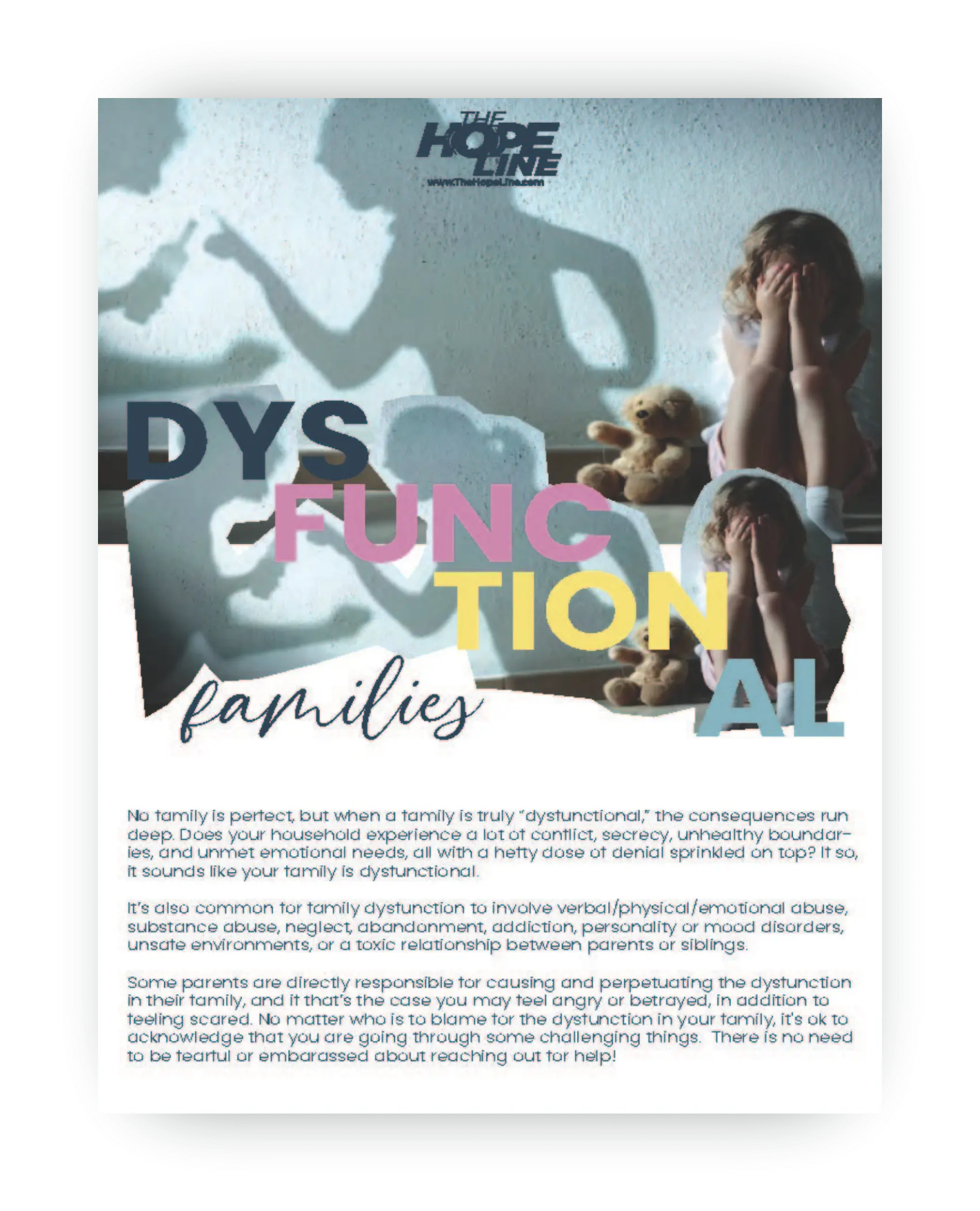
An absent or distant father leaves a real gap. This free guide is full of insight and practical steps for working through the family patterns you grew up in.
RESOURCES FOR YOU

More to explore

Helpful articles, resources, guides, and related topics.

Tired of The Problem?

Try the Solution.

Privacy Policy / Terms of Use
© 2026 TheHopeLine, Inc. Registered 501(c)(3). EIN: 20-1198064